isnow in a QR code
Because an isnow is one short token and a self-contained membership test, a device that scans it can answer “is this active now?” from its own clock — offline, no server, no series to expand. That makes a QR code a natural carrier for a schedule.
Every realistic isnow fits a tiny code
QR codes come in versions — lower is smaller and easier to scan. isnow’s one-token compactness keeps codes at the very low end:
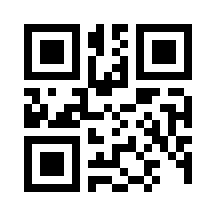
M-F 09:00 — 9 bytes, Version 1 (21×21 modules), the smallest QR code that exists.
![QR code for the isnow M-F +[30mn] >=9 <=17](/docs.isnow.go/qr/rich.png)
M-F +[30mn] >=9 <=17 — every 30 minutes inside business hours; 20 bytes, Version 2 (25×25).
![QR code for the isnow M-F-[1] noon ! 12/25 ! 1/1](/docs.isnow.go/qr/advanced.png)
M-F-[1] noon ! 12/25 ! 1/1 — the last business day at noon, minus holidays; 26 bytes, Version 2 (25×25).
For comparison, the equivalent iCalendar RRULE for the middle schedule — FREQ=MINUTELY;INTERVAL=30;BYDAY=MO,TU,WE,TH,FR;BYHOUR=9,10,…,17 — is 79 bytes and needs a Version 5 (37×37) code: over twice the module area for the same schedule. Uppercased, isnow’s core algebra (* / : + - ,, space, names, digits) even fits QR’s densest alphanumeric mode; only [ ] < > = ! from the interval, bound, and exclusion extensions force byte mode.
What it’s good for
- Offline membership at the edge. A restriction sign, a ticket (“valid
M-F 09-17”), an appliance panel, an NFC-tagged door — scan and the device decides, now, with no lookup. - Config handoff. Move a maintenance window or a flag schedule between systems as a scannable value instead of a form.
- Constrained channels. Anywhere the payload budget is a few dozen bytes and the reader has a clock.
A QR-encoded isnow carries a recurring policy — “every weekday, 9 to 5” — not a pinned, counted event. For a bounded, counted series, pair it with a calendar.